FIUME O MORTE! is a reminder of the time the fascists took over for a bit. Then everyone forgot about it.
Fiume o morte! is a slyly entertaining film about a dreadful subject, but don't feel too left out if you didn't know it existed. It went from film festivals in 2025 to a European release to a very limited North American theatrical experience earlier this year. Now it's available to stream (or own on physical media) and I'm here to tell you that you should.
A hybrid documentary from Croatian filmmaker Igor Bezinović, Fiume o morte! ("Fiume or death!") resurrects the story of Italian poet Gabriele D'Annunzio, an aristocrat, nationalist, and "avid cocaine user" who decided to annex an entire city – Fiume, now known as Rijeka, part of Croatia – for himself. He accomplished this in 1919, with shocking ease, and set up a fascist municipality for about 16 months. During that time, Croat families fled, even with assurances that if they "behaved" themselves then no harm would come to them. Young men were drafted into a military force, elections were disrupted and polling stations seized, opposition made illegal, and propaganda about freedom, purity, and, essentially, the sacred project of making Fiume great again, held sway.
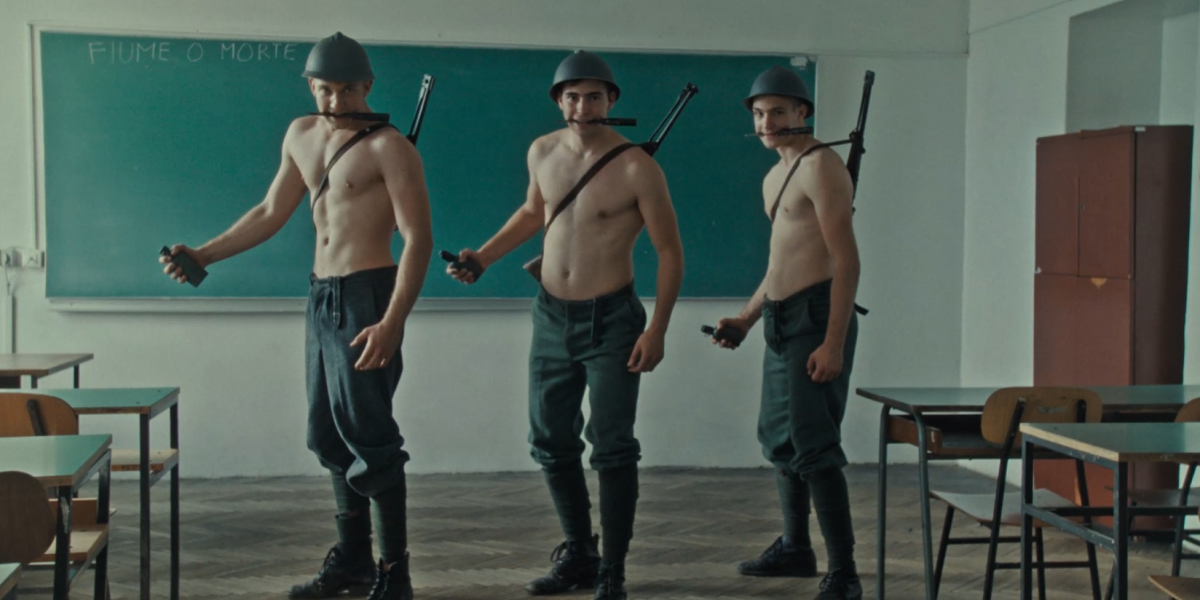
One hundred years later, Bezinović takes his camera to the streets of Rijeka and asks people if they know who D'Annunzio was. Many do not. Even though he's understood by historians to have set the stage for Mussolini, he seems a largely forgotten political figure. The filmmaker then recruits volunteers to reenact archival footage and still photos from the D'Annunzio moment, employing era-specific costuming, specific locations from the archival material, sometimes set-dressed to their former function (a nail salon becomes the tavern it was a century ago), as well as every sort of anachronistic contemporary accessory available, from mobile phones to electric guitars, all to fold the past into the present. A coup is kicked off in a brand new car, a fully amped rock band playing by the side of the road.
A number of the film's participants know and understand the region's history, but many of the performers, like the rowdy young men in Bezinović's make-believe army, often seem amused by the scenarios, in a "Can you believe they fell for this?" way, as though the event's century-old place in history might as well neuter its power and possibility. Understandable, of course. Who wants to imagine it happening again?
Bezinović carefully assembles that double-edged perspective throughout. The young actors cheer and sing on camera about the pride of fascist youth. Later, there's a light-hearted shot of the assembled, upbeat throng, half-undressed, staring at their phones, scrolling.
But as the fun of playing historical dress-up settles into recreating, in uncomfortable detail, situations of political violence, the more sobering the project becomes. The distancing effect that comes with surveying the past and seeing the absurdity of historical fascism, the way it flamboyantly announces its own superiority, following similar trajectories every time, gives way to the film's thesis: They did fall for it. And then they did it again. Somewhere else – the U.S. for example – it's happening right now. In the final moments, tasked with miming the violent end of the occupation – known as "Bloody Christmas" – and playing dead on the ground, covered in fake blood and realistic make-up wounds, the earlier occasional smirks of the participants are nowhere to be seen.
In 2019, a statue was erected to D'Annunzio. Not in Rijeka. In Triesta. Croatians weren't happy about that. Neither were a lot of Italians. But enough people were enthusiastic about its placement that now it sits, like a Confederate statue in the U.S., not yet vandalized or attacked, for now.