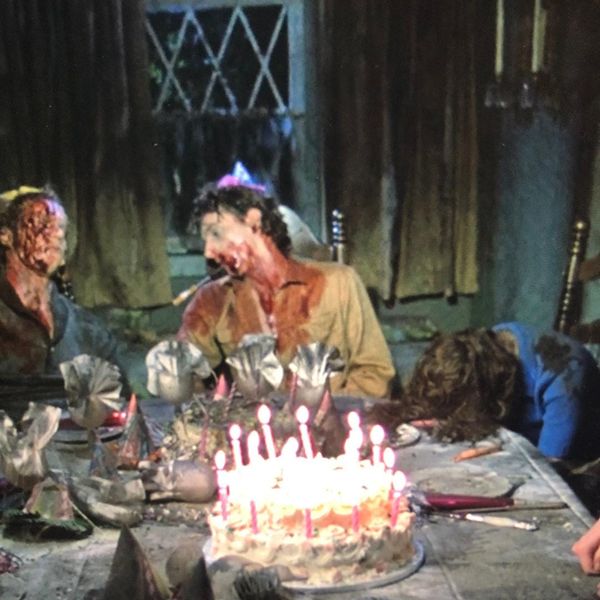
Under 500: BURNT OFFERINGS
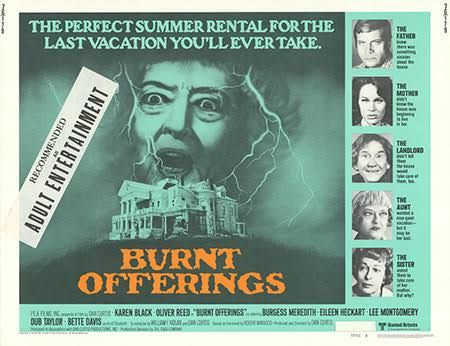
A chair is just a chair, but if that chair is inside a sinister, murderous house and sitting in it turns you into a possessed meal prep zombie, then you should consider leaving. This is the fate of Karen Black in Burnt Offerings, a 1976 supernatural horror film about a stately death manor that traps and kills its occupants in order to rejuvenate itself. It's not haunted, just evil, and it lives by consuming the souls of the sacrificed.
The ancient mansion is a summer rental for Black, her husband Oliver Reed, their son Lee Montgomery, and their great aunt Bette Davis, and from the moment they arrive they're powerless against an atmosphere of suffocating strangeness.
There's an elderly, unseen, seemingly bed-ridden woman in an upstairs chamber and Black becomes her caretaker, forever making food, delivering it on a tray, watching it sit uneaten, and wearing 19th century clothes, as her obsession with the phantom grandma metastasizes. Reed spends a lot of time outside being angry, taking off his shirt, falling into unexplained trances and violent states, and failing to keep his son from almost drowning in the pool a couple times.
Bette Davis hangs out and smokes. Then she drops dead, almost certainly happy to be wrapped early, as the fun actor gossip about the shoot is that allegedly the three top-billed stars hated each other. In any case, the moment she expires, every withered plant in the untended greenhouse comes back to life. There's a creepy chauffeur who pops up and waits to drive the residents to, one assumes, Hell. The house shakes and re-shingles its own roof. Terrible fates await everyone involved and there's no escape.
Characters behave in ways that don't correspond to rational behavior, nor do they react in a reasonable manner to the disturbances that consume them. The house has them in its grasp. The direction by Dan Curtis, who created the TV series Dark Shadows, mimics the stop/start rhythms of that gothic soap opera, which only adds to the fractured, unsettling tone. If there's a 1970s-era theme at work, the on-the-nose, no-fault-divorce choice of interpretation would be it. Domestic life is being dismantled, and the extended family structure fails as a defense against chaos.
Ultimately, the film's reactionary position doesn't make it any less enjoyable. It can exist as a simple story of a very hungry, bad-vibes house that needs to keep eating. And as an antecedent to The Shining with less horror at stake but more goofy weirdness on display, it's still something of a treat to watch a living, breathing, piece of rotten real estate destroy an entire family for the sake of its own budget-minded renovation.