Action Looking
People like to ask how I'm doing. Lots of questions, even now, almost two years down the road. Do the new hips work? How do I feel? Am I going places? My surgeon all but demanded that I go places. I'm going places. When I'm not seeing a film for work, I like to go to galleries and museums.
Friends accompany me, or I go alone. I'm happy with both scenarios, but a solitary situation is a special treat because I can be in public but silent. When you go to a gallery, no one who works there is going to grill you about anything. If you're lucky they won't even look up from their entrance desk to acknowledge that you came in. If you're new to that experience, it might make you feel like an interloper. You are not. You waltz in like you own the place. You're there to inspect them.
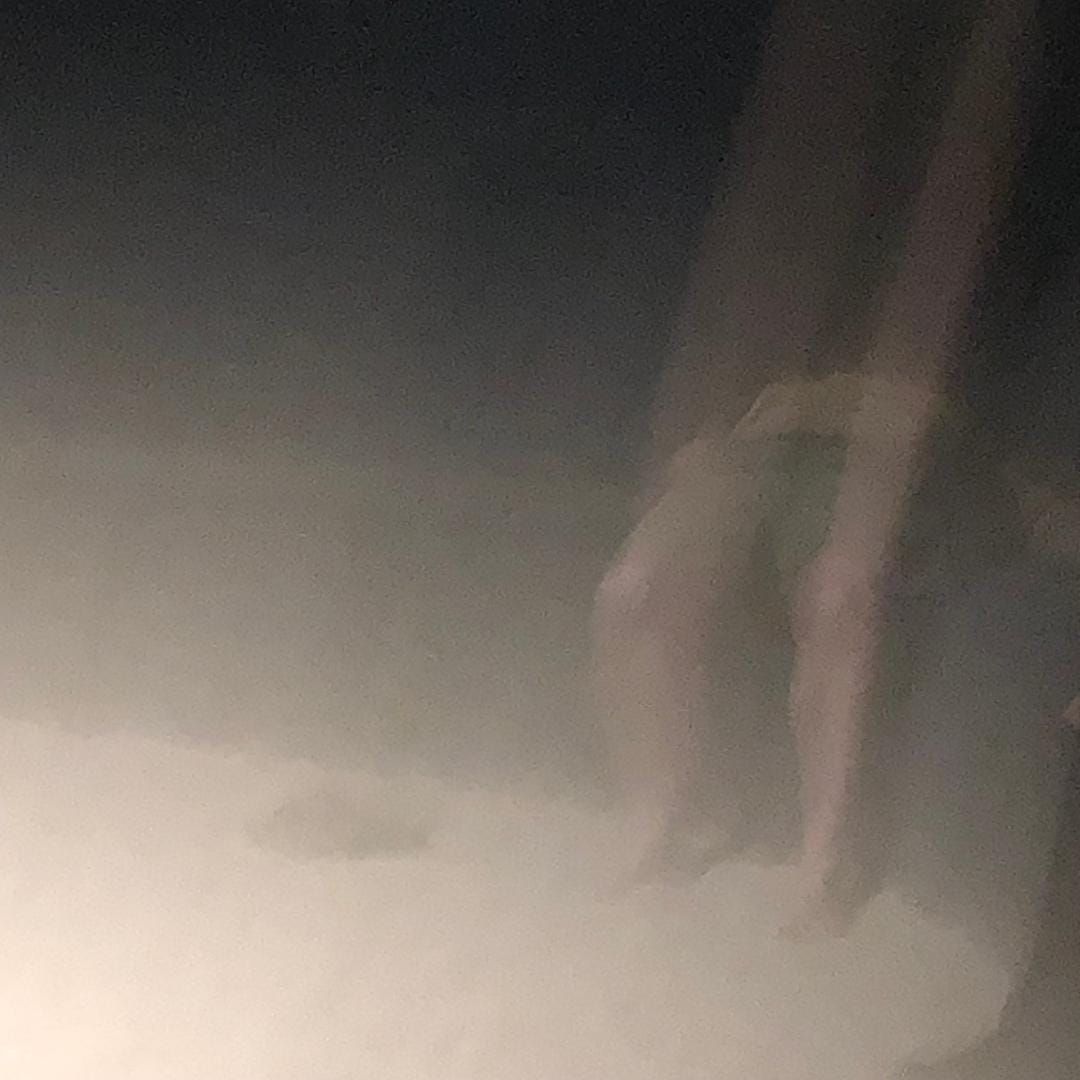
I took the above photo at the Hammer Museum. Friend and Neighbor Gary Cotti kicked off his Birkenstocks and napped for a bit in a dark room with a large seating area and sand on the floor. I can't remember why the dark room had sand all over the floor but lots of people were in there enjoying it. Gary was the only person who took it to the next level of personal comfort. "Casual Gary," our friend Grae calls him.
The show we went there to see, called Space Is the Place, takes its name from Sun Ra's film and album, and features selections from the Hammer Contemporary Collection. Work from too many names to list here (click the link for more) but among them Betye Saar, Arthur Jafa, Nayland Blake, Mark Bradford, and Paul Mpagi Sepuya – the latter's early zine SHOOT was a favorite of mine in the mid-2000s, since collected into one book. I'm always enthusiastic to visit a themed arrangement of pieces from a permanent collection, and if you've set up a Sun Ra moment in your museum, I'm going.
I loved Lauren Halsey's ombre wall piece of multicolored hair extensions. It was new to me and it's the kind of undeniable color field that pulls you to the wall text to learn more about how she works, re-presenting objects that are part of specifically Black cultural experiences. The comment I heard from a woman standing near it, as she was explaining Afrofuturism to some friends – "It's Star Trek for Africans" – will keep it in my head probably forever for reasons perhaps not intended by Lauren Halsey.
Eric Wesley's bulletin board of hand drawn maps of Los Angeles was also new to me and filled me with civic pride. It's a big city with lots of people's lives moving in personal directions, their own circumference of destinations, of chosen and obligated activity, and I'm always curious about where those lines get drawn.
Mark Bradford's 22-foot-long James Brown Is Dead makes monumental a tabloid headline. It's the kind of thing that provokes personal associations very quickly, regardless of how irrelevant they might be. Brown died in 2006, hence that headline, but my immediate body memory comes from a gay club in Texas where the 1991 Eurodance track "James Brown Is Dead" was playing. Bradford is gay and roughly my age. Was he in a similar dance club in 1991? Is that embedded in this piece? I don't know Mark Bradford, so I'll assume this one is just me.
Arthur Jafa's film, The White Album, is a 30-minute visual collage of white people doing white people shit. When you're a progressive white person, you watch it and say, "Yep. Yep. Accurate. That too. Oh shit I did that once." (that = getting very aggressively into being part of a high school marching band, 1978 to 1982, playing fight songs on French Horn like not just football but the fate of humanity weighed in the balance). The film's most memorable moment is the TikTok teen – who didn't think about the future use of her clip, and how it might be appropriated for an experimental film that plays on a loop in a museum – rambling incoherently about how Not Racist she is.
*
I made a solo visit to Chateau Shatto for a show by Van Hanos, a series of paintings he made and then mostly obliterated with solvent. At first approach, they deliver that nice anxious feeling of disorientation, of not knowing what's happening when you look at something for the first time. What am I supposed to be seeing? The image? The process? What's under the process? Is this painting a ghost? Is it sabotage or a determined move? Why paint then unpaint?
We want to look at an object and know what it is, so we can settle the matter. After several years of looking at Hanos' work, I've decided that I won't decide. He's a picture-maker and a conceptualist. He shifts gears and moves into new territory, when in many other painters' bodies of work, it's easier to talk about a consistent way of working that can last for long stretches.
When writing or talking about film, being confronted with a filmmaker who's hard to pin down just makes me more excited to follow their trail. It's a reminder that I'm not expected to win at interpretation or sometimes even interpret at all, even if that's my job. We are meant to look and keep looking and think and re-think. That's it. You never get to a destination with any artist. They keep making and showing and you keep talking to yourself and changing your mind about it.
*
There is no art-seeing without food afterward. I don't know how you feel about that but it's my personal rule. When in Los Angeles, go to Liu's Cafe. Eat the spicy wontons, the braised pork belly rice, the sesame cold noodles with chili crisp. Eat all of it. Talk about the art, or talk about how much you like the wontons.